Crawl Space Encapsulation: How Long It Lasts and 5 Signs It’s Failing
Crawl space encapsulation is not a one-time fix you can forget forever. In most homes in Charlotte NC, a professionally installed system can hold up for 15 to 25 years, and some parts may last longer if the space stays dry and the materials are kept intact.
That lifespan depends on one thing more than anything else: moisture. If water keeps getting in, even a well-installed system can start to break down early. That matters because crawl spaces affect indoor air quality, structural wood, insulation, and the overall condition of the home.
Moisture protection and healthier indoor air are core reasons why homeowners in the Charlotte area should encapsulate crawl spaces in the first place.
What crawl space encapsulation actually includes
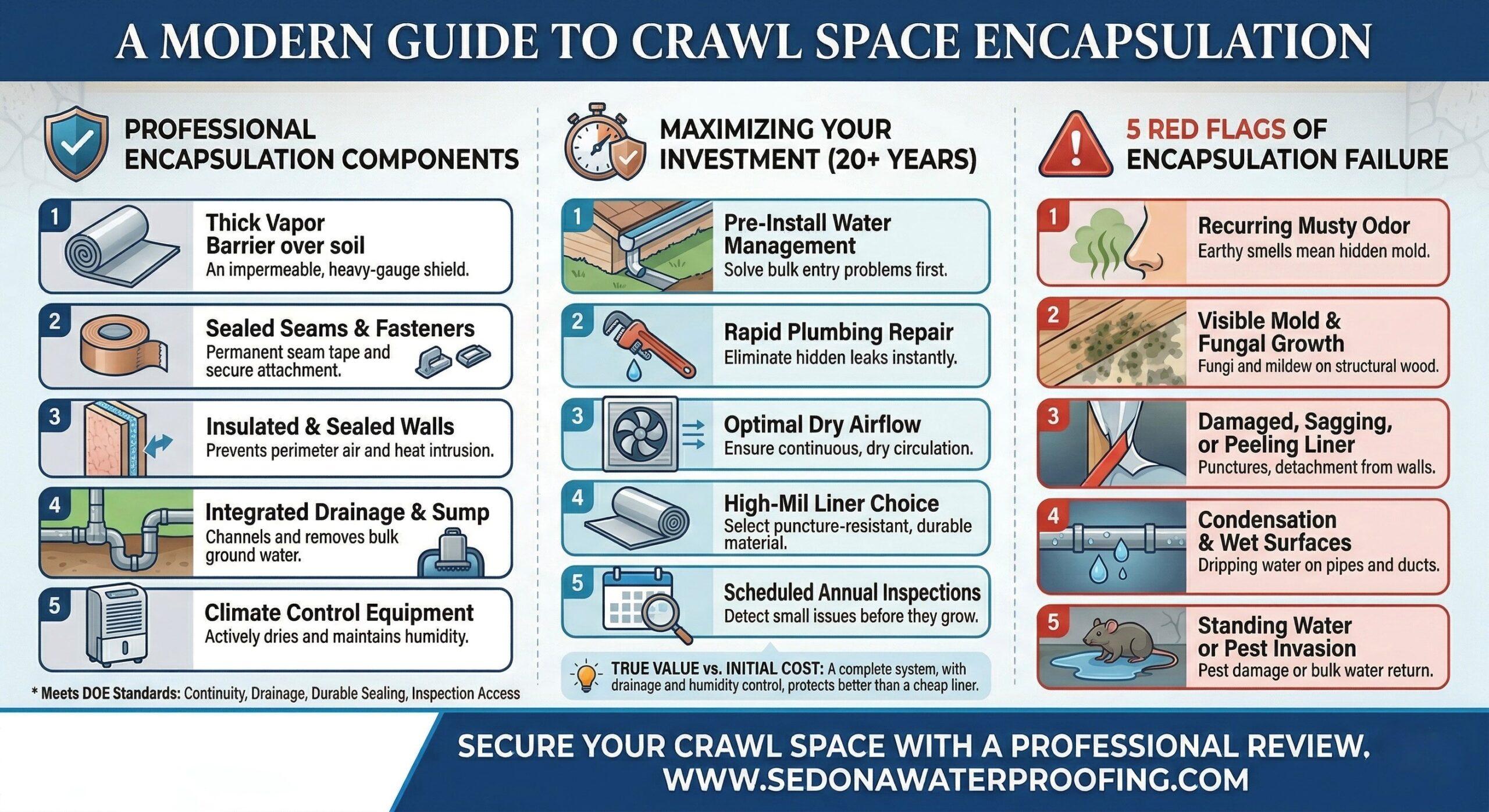
A true crawlspace encapsulation system usually means more than plastic on the ground. It often includes:
- A thick vapor barrier over the soil
- Sealed seams and fasteners
- Wall attachment and sealed edges
- Air sealing around vents and gaps
- Drainage planning that does not trap water
- In many homes, a sump pump or dehumidifier
That full package is what gives the system a real chance to last. The Department of Energy’s crawl-space standards stress continuity, drainage, durable sealing, and access for inspection rather than a loose liner alone.
How long it lasts and what changes that timeline
A good encapsulation system often lasts two decades or more. The liner itself may still look decent after that, but attached components such as dehumidifiers can have shorter service lives and may need replacement sooner. A system lasts longer when:
- Bulk water is addressed first
- Plumbing leaks are fixed quickly
- Humidity stays under control
- The liner is thick enough for the space
- Annual inspections catch small damage early
That is also why homeowners comparing crawl-space sealing costs should not focus on the liner price alone. A cheaper installation that skips drainage, seam sealing, or humidity control can cost more later in repairs.
Five signs the system is failing
1. A musty smell keeps coming back
A persistent earthy odor is often the first clue. Mold does not need a dramatic flood to grow; it needs moisture. EPA notes that mold problems track back to moisture problems, and crawl spaces with high relative humidity are common places for hidden growth. If the smell returns after cleaning, the space may still be damp behind the liner or along framing.
2. You can see mold, mildew, or stained framing
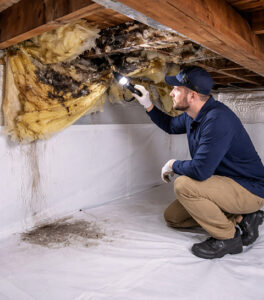
Visible fungal growth on joists, subflooring, or insulation is a warning sign that moisture control has slipped. Experts advise routine checks for water problems, mold growth, and wood rot in crawl spaces. At that point, replacing plastic alone is not enough. The home may need crawl-space mold cleanup before the encapsulation is repaired or replaced.
3. The liner is torn, sagging, or pulling away
Encapsulation fails in plain sight too. Rips, loose tape, detached wall sections, and punctures around piers let ground moisture back into the space. Over time, foot traffic, pests, poor fastening, or past water intrusion can damage the liner. Once that barrier is no longer continuous, the whole system becomes less reliable.
4. Condensation shows up on pipes, ducts, or wood
Water droplets on surfaces inside an enclosed crawl space usually point to a humidity problem. That can mean the dehumidifier is undersized, not working, or the space still has air leaks or water entry. In a humid area, condensation is not a cosmetic issue. Left alone, it can feed mold and start damaging wood and insulation.
5. Standing water or pests are back
Standing water is a serious red flag. Standing water in a crawl space is caused by a plumbing leak or groundwater entering from outside or below. Pest activity matters too, because rodents and insects can tear liners and open gaps. If water is ponding under the home, the encapsulation is not the main problem anymore. The drainage system needs attention first.
Repair it or start over?
Minor damage does not always call for full replacement. Localized tears, loose seams, or a failed dehumidifier can often be fixed. Widespread mold, repeated water intrusion, and large sections of detached liner usually point to a bigger reset. When you look for a crawl space encapsulation contractor, ask whether the company inspects the moisture source instead of just patching the surface. That is the difference between a repair that lasts and one that buys only a little time.
Final thought
A crawl space encapsulation system should not fail quickly. If it does, the space is usually telling you something: water is still getting in, humidity is still too high, or the original work left weak points behind. Watch for odors, visible growth, damaged liner sections, condensation, and standing water. Those are some of the clearest warning signs of mold under the house and of an encapsulation system that is no longer doing its job.
Frequently Asked Questions:
1. How often should an encapsulated crawl space be inspected?
At least once a year is a sensible baseline. Twice-yearly checks are even better in homes with past moisture problems. Inspections should focus on liner damage, humidity, plumbing leaks, and signs of mold or pests.
2. Can mold still grow after encapsulation?
Yes. Encapsulation lowers the risk, but it does not erase it. If humidity stays high or water enters from leaks or groundwater, mold can still grow in framing, insulation, or dust on surfaces.
3. Does encapsulation remove existing mold?
No. Existing growth needs separate cleanup. EPA states that moisture must be corrected and mold handled directly, not covered up and ignored.
4. What usually affects price the most?
Size matters, but so do drainage work, sump pumps, dehumidifiers, mold treatment, and the condition of the crawl space before work begins. Those added repairs often change the estimate more than square footage alone.
5. Is a dehumidifier always part of the system?
Not always, but many closed crawl spaces benefit from one. It helps control air moisture after the liner is installed, especially where humidity remains high for long stretches.
If your crawl space smells musty, feels damp, or shows signs of liner damage, schedule a professional inspection before small issues turn into costly repairs. Sedona Waterproofing Solutions helps Charlotte homeowners protect their homes with crawl space solutions built to last.