Designing for Dampness: How to Create a Luxury Basement That Can Handle a Flood
The basement is both opportunity and hazard. Local clay soils in areas like Charlotte, NC, hold stormwater, then swell and press against foundation walls, driving moisture through any gap or crack. Turning that space into a luxury living area means planning for comfort and for the day water tries to get in.
Start with the local risk, not the sofa fabric
North Carolina’s residential code requires foundation waterproofing where high water tables or severe soil-water conditions exist, which includes many Charlotte neighborhoods.
A smart design maps potential moisture paths: surface runoff at the foundation, seepage through walls and slab, condensation on cool surfaces, and backups from drains or sump pumps.
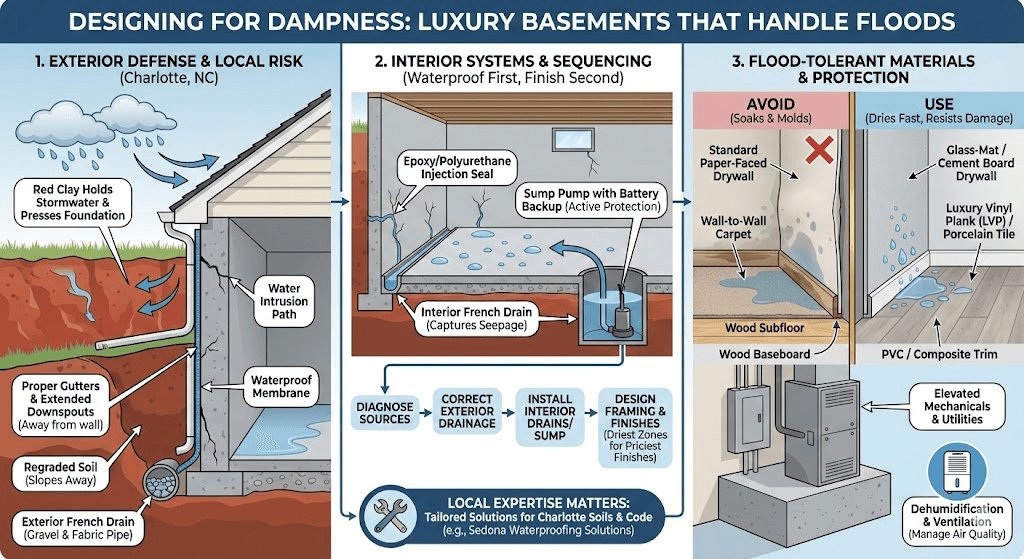
Exterior grading and drainage: first line of defense
Many damp basements begin with basic exterior problems. Gutters that overflow, downspouts that discharge next to the wall, and soil that slopes toward the house send thousands of gallons of water against the foundation during one storm.
Re-sloping soil away from the house, extending downspouts, and adding shallow swales can sharply reduce that load.
Homes in low spots or near creeks often need more robust measures. Exterior French drains at footing level, wrapped in fabric and gravel, collect groundwater and carry it to daylight or a sump, while quality waterproof membranes on the exterior wall add another barrier from footing to grade.
Interior systems that assume water will show up
- Even with good exterior work, a flood-ready basement should assume some water will still try to find its way inside.
- Interior French drains cut into the slab along the perimeter capture seepage and direct it to a sump basin.
- A reliable submersible pump with a battery backup or secondary pump provides protection when storms knock out power, and periodic testing keeps the system ready.
- Cracks in walls and slabs can be sealed with epoxy or polyurethane injections so moisture does not reach finished areas, and masonry can be treated with suitable waterproof coatings where intrusion is light.
Many Charlotte homeowners planning high-end remodels talk with local specialists about zero failure basement waterproofing so the structure and the finishes are engineered as a single, dependable system.
Materials that can get wet and still look good
The test of a luxury basement often arrives after a wet event.
- Standard paper-faced drywall, finger-jointed trim, and wall-to-wall carpet soak up water and support mold.
- Flood-tolerant assemblies use closed-cell spray foam or rigid foam against concrete, mineral wool insulation, and glass-mat or cement board drywall so walls dry faster and resist damage.
- On the floor, many designers prefer porcelain tile, luxury vinyl plank, or sealed concrete instead of solid hardwood. These surfaces tolerate brief wetting better than wood, and comfort can be added with rugs that can be removed, cleaned, or replaced.
- Cabinets, bars, and media walls set on legs or concrete plinths stay above shallow water instead of soaking up the first inch of a flood.
Protecting mechanicals, utilities, and air quality
A finished basement often houses mechanical equipment, electrical panels, and storage. Raising outlets, junction boxes, and key HVAC components above expected water levels reduces repair costs, and FEMA highlights the benefit of elevating utilities wherever possible.
Persistent humidity also affects indoor air quality. Many Charlotte projects now include dedicated basement dehumidifiers and sealed crawl-space systems to manage moisture year-round, paired with ventilation and routine radon testing.
Sequencing the project: waterproof first, finish second
For homeowners interested in waterproofing basement before finishing, the smart sequence is consistent:
- diagnose moisture sources,
- correct exterior drainage,
- install interior drains and sump systems,
- then design framing and finishes around those choices.
Skipping straight to drywall and flooring almost guarantees peeling paint, swollen trim, and musty odors within a few seasons.
Once the shell and systems are ready, layouts for theaters, guest suites, gyms, and offices can be developed with a different mindset.
The priciest finishes go in the driest interior zones, while more rugged materials and easily cleaned surfaces sit near exterior walls, drains, and sump locations.
Also Read: Crawl Space Waterproofing and Encapsulation: Protecting Your Home from Mold and Structural Damage
Why local expertise matters in Charlotte
Charlotte’s red clay, intense summer storms, and blend of older and newer foundations call for contractors who understand regional soils, weather, and code requirements.
Sedona Waterproofing Solutions, based in the greater Charlotte area, specializes in crawl-space encapsulation, basement waterproofing, and foundation repair tailored to these conditions, helping homeowners protect finished spaces from recurring moisture and structural stress. Visit https://www.sedonawaterproofing.com/ to book a consultation.
Frequently Asked Questions
1. Why are Charlotte basements so prone to water problems?
Clay-rich soils around Charlotte expand as they absorb water and press against foundation walls, creating hydrostatic pressure that drives moisture through cracks and joints during heavy storms.
2. Can I finish my basement if I’ve had water in the past?
Yes, but only after the water source is identified and corrected with drainage improvements, interior drains and sump systems, and crack repairs before any new framing or flooring goes in.
3. What’s the best flooring for a luxury yet flood-tolerant basement?
Tile, luxury vinyl plank, and sealed or stained concrete handle short-term wetting better than hardwood or wall-to-wall carpet and can be paired with removable rugs.
4. Do I really need a backup sump pump?
A backup pump or battery system is relatively low-cost insurance compared with replacing finishes after a flood, especially since power outages often arrive with intense storms in North Carolina.
5. Who should I call to design a flood-ready luxury basement in Charlotte?
Look for waterproofing contractors with strong local references and experience on finished basements; Sedona Waterproofing Solutions serves Charlotte and nearby communities with inspections and customized waterproofing plans.