The Evolution of Crawl Space Repair
Many homes have been built with crawl spaces below them. Effectively, this is a small space that sits underneath your basement. There’s an air gap that separates your home from the earth beneath it. In theory, this helps reinforce the foundations and prevents moisture from creeping into your basement.
Unfortunately, crawl spaces are prone to various issues. Primarily, problems occur when they’ve not been taken care of properly. When houses are built, the crawl space gets almost no attention at all. The builders may give it a passing glance when they finish up the home, but it’s usually left with no treatment at all.
Consequently, problems occur due to moisture coming from the soil and dirt/dust contaminating the air. From here, these issues translate from the crawl space into your basement. As a result, you end up with damp areas on the basement floor, pooled water, and poor indoor air quality. So, crawl space repair is required.
Over the years, crawl space repairs have changed quite dramatically. Today, we want to explain how they’ve evolved…
Crawl space sealing
Back in the day, sealing a crawl space was seen as the go-to repair. Here, you laid down a vapor barrier on the floor of this space. The idea was that it protected the space from the earth and stopped moisture from coming up into it.
Typically, you might see about 8 inches of the walls covered as well – but that was it.
Crawl space encapsulation
Over the years, many people realized that this method of crawl space repair just didn’t cut it. Yes, the space was protected from below – but what about from the sides? Also, the property above the crawl space saw no protection at all.
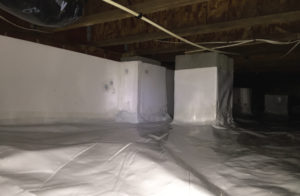
So, step forward crawl space encapsulation. With this method, the entire space was covered and protected. This means the whole flooring, all the walls, and the ceiling as well. Additionally, the idea to use insulation inside the crawl space was also introduced. Again, this helped control moisture levels and prevent air from escaping up to the house above.
As such, modern crawl spaces look vastly different from old ones. Due to the new repair methods, they’re entirely sealed off and kept in much better condition. This leads to fewer cracks in the walls, less chance of animals entering the space, and better air quality/moisture control.
Finding the best crawl space repair services
If you need crawl space repairs, then it’s essential you find the best services. Make sure that the company offers modern ways of repairing a crawl space. If all that’s offered is the old technique of floor sealing, then this won’t be good enough for you.
Instead, you need a company that offers full-scale crawl space encapsulation. As it happens, we provide just that. So, if you need help with any crawl space issues, then get in touch with us today. Give us a call, and we will schedule a consultation at a time that’s convenient for you. From here, we’ll provide a free quote based on your needs.