Is 6-Mil Vapor Barrier Still Enough? Why NC Professionals are Moving to 12-Mil in 2026
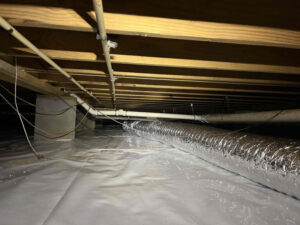
Homeowners comparing a 6 mil vs 12 mil vapor barrier usually start with one question: if 6-mil still meets code, is it really enough? In North Carolina, the answer is often yes for minimum compliance, but not always for long-term performance.
For a typical crawl space vapor barrier in North Carolina, the real choice is not just about passing inspection. It is about how long the liner will last, how well it stays sealed, and whether it can keep doing its job after plumbers, pest technicians, or HVAC crews move through the space. That is where thicker materials have gained ground.
Why Crawl Spaces in North Carolina Need More Than the Bare Minimum
North Carolina homes sit in a climate that exposes crawl spaces to steady moisture pressure for much of the year.
Warm outdoor air, damp soil, and seasonal condensation can all feed the same problem: moisture that lingers below the house and slowly affects wood, insulation, and air quality.
For homeowners thinking about vapor barrier thickness, the local climate matters as much as the code book. The DOE also notes that moisture control in crawl spaces depends on air sealing and climate, not just the presence of a liner.
Charlotte crawl space moisture problems
In the Charlotte market, contractors routinely point to damp air, musty odors, and wet insulation as signs that a basic ground cover is not enough on its own.
Some experts now describe reinforced 10-mil to 20-mil liners as standard for more durable systems, with 10-mil to 12-mil often presented as the practical middle ground.
6-Mil vs 12-Mil: What Changes in Real Use?
The biggest difference is durability.
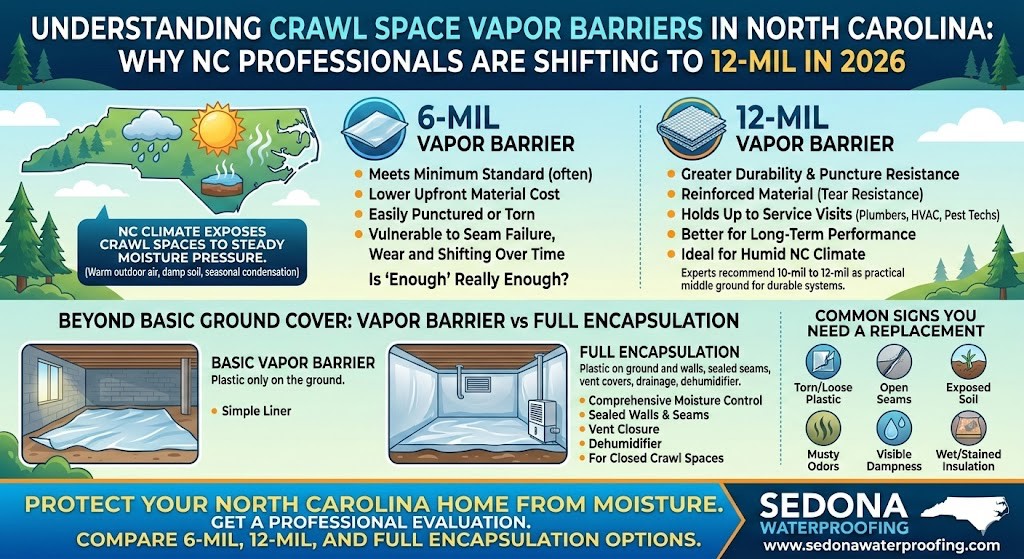
- A 6-mil liner can block ground moisture when it is installed correctly, but it is easier to puncture, easier to tear, and more likely to shift or wear down over time.
- A 12-mil liner is thicker, more resistant to damage, and often reinforced for better tear resistance.
Manufacturers and suppliers market 12-mil products as better suited for long-term crawl space use, especially where the ground is rough or the space sees foot traffic after installation.
A simple side-by-side view helps:
- 6-mil
- Meets the minimum standard in many crawl space applications
- Lower upfront material cost
- More vulnerable to punctures and seam failure
- 12-mil
- Better resistance to wear and tearing
- Holds up better during service visits
- Often chosen when homeowners want a longer service life
That is why many contractors describe 12-mil as the better fit for humid climate crawl space protection in Carolina, even when a thinner liner would still satisfy the minimum rule.
When It Makes Sense to upgrade crawl space vapor barrier
A replacement often makes sense when the existing liner is no longer doing consistent work. Common signs include:
- torn or loose plastic
- open seams
- exposed soil
- musty odors that never quite go away
- visible dampness after rain
- insulation that looks wet, stained, or sagging
If those issues keep returning, the problem may not be the age of the liner alone. It may be the material choice, the way it was installed, or the fact that a simple ground cover is being asked to do more than it can.
Crawl space encapsulation Vs vapor barrier
A basic vapor barrier covers the ground. Full encapsulation is broader. It may include sealed seams, wall coverage, vent closure, drainage measures, and a dehumidifier.
Closed crawl spaces require full floor coverage, sealed edges, and wall integration in systems designed to control moisture more completely. If a crawl space stays damp after a liner install, the issue may be moisture entering from more than one path.
That distinction is one reason Greensboro crawl space repair professionals and contractors often recommend a site-specific inspection before quoting a simple liner replacement. A thin sheet on the soil can help, but it cannot solve drainage, outside air leakage, or chronic humidity by itself.
Also Read: Crawl Space Encapsulation Checklist: Don’t Sign a Contract Without These 5 Things
What’s the vapor barrier installation cost in North Carolina
Cost is one part of the decision, and it is rarely just about material thickness.
National pricing sources place professional crawl space vapor barrier installation around $1,000 to $3,000 in many cases, while encapsulation projects often cost much more.
The thickness of the liner affects price, though labor, access, cleanup, and repairs usually drive a large share of the bill.
[Get a Vapor Barrier Quote]
For many homeowners, the cost difference between 6-mil and 12-mil is easier to justify when they compare it with the cost of replacing a damaged liner a few years earlier than expected.
Final Verdict
A 6-mil liner is still enough to meet the minimum standard in North Carolina. In many homes, that is where “enough” stops. If the crawl space is damp, frequently accessed, or part of a larger moisture-control plan, a 12-mil liner often makes more sense because it is tougher and more likely to stay intact over time.
If your crawl space still feels damp or your current liner is torn, loose, or aging, now is a good time to have it evaluated by a professional. Contact Sedona Waterproofing to compare 6-mil, 12-mil, and full encapsulation options and get a solution that fits your home’s moisture conditions.
Frequently Asked Questions
- Is 6 mil vapor barrier up to code in North Carolina?
Yes. Current North Carolina guidance still identifies 6-mil polyethylene as the minimum crawl space ground vapor retarder.
- What is the difference between 6 mil and 12 mil vapor barrier?
The main difference is durability: 12-mil is thicker, stronger, and more resistant to tearing and punctures.
- Is 12 mil vapor barrier worth the extra cost?
It often is when the goal is longer service life and fewer repairs.
- How long does a 6 mil vapor barrier last in a crawl space?
Service life varies by moisture, traffic, and installation quality, so there is no one fixed lifespan.
- Does NC building code require 12 mil vapor barrier in 2026?
No. The minimum remains 6-mil, not 12-mil.
- What thickness vapor barrier do contractors recommend in NC?
Many contractors now recommend reinforced 10-mil to 12-mil or heavier systems for better durability.
- Can I put a 12 mil vapor barrier over an old 6 mil one?Sometimes, though the condition of the old liner and the quality of the seal will decide whether that is a sound approach.
- Why is my crawl space still damp with a 6 mil barrier?
Ground cover alone may not address outside air, drainage problems, or unsealed gaps.
- What is the best vapor barrier thickness for a humid NC climate?
In many cases, 10-mil to 12-mil reinforced material is the practical sweet spot for durability and cost.
- How much does it cost to upgrade from 6 mil to 12 mil vapor barrier in North Carolina?
The exact premium varies, though the total installed price is often shaped more by labor and crawl space conditions than by the liner alone.