
Crawl Space Encapsulation vs. Vapor Barrier: What’s the Difference?
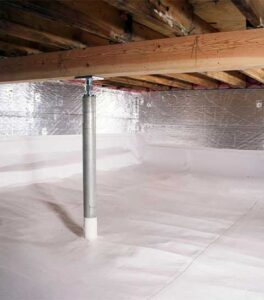
A crawl space vapor barrier slows moisture that rises from exposed soil. Crawl space encapsulation goes further by turning the crawl space into a more controlled area with sealed floors, walls, seams, vents, and common air leaks. The U.S. Department of Energy recommends installing a polyethylene vapor diffusion barrier across a crawl space floor to help prevent soil moisture from moving into the space, with seams overlapped, taped, and sealed up the walls.
For homeowners, the choice usually comes down to the condition of the crawl space. A simple ground liner may work for light dampness. A full sealing system is better when the area has persistent humidity, musty odors, wet insulation, or signs of mold.
Crawl Space Encapsulation & Vapor Barrier Difference – Quick Answer
A vapor barrier is one part of crawl space moisture control. It is usually a plastic or reinforced liner installed over the dirt floor to reduce moisture evaporation from the ground.
Encapsulation is a broader system. It often includes a heavy-duty liner over the floor and walls, sealed seams, closed vents, air sealing, drainage improvements, and sometimes a dehumidifier.
In practical terms:
- A vapor barrier helps block ground moisture.
- Encapsulation helps control ground moisture, humid air, and air leaks.
- A basic liner may be enough for a mostly dry crawl space.
- Full encapsulation is usually better for long-term moisture problems.
What is a Crawl Space Vapor Barrier?
A crawl space vapor barrier is a moisture-blocking sheet installed over exposed soil. Most systems use polyethylene or a reinforced liner. The goal is to keep soil moisture from evaporating into the crawl space air and moving upward into the home.
A vapor barrier can help when the crawl space is generally dry but has bare ground. It is often a lower-cost starting point because it focuses mainly on the floor.
A basic liner may not solve every moisture issue. It usually does not fully seal:
- Foundation walls.
- Open vents.
- Rim joists.
- Plumbing or wiring penetrations.
- Gaps around piers.
- Water intrusion from poor drainage.
That is why installation quality matters. Loose sheets with gaps, tears, or unsealed seams allow moisture to keep moving into the space. The Department of Energy recommends overlapping seams, taping them, and sealing the barrier up the crawl space walls for better performance.
What Is Crawl Space Encapsulation?
Crawl space encapsulation is a more complete method of sealing and moisture control. Instead of only covering the soil, it separates the crawl space from both ground moisture and outside air.
A typical encapsulation project may include:
- Cleaning debris and damaged materials.
- Installing a thick liner across the floor.
- Extending the liner up foundation walls and around piers.
- Sealing seams, edges, vents, and penetrations.
- Adding drainage if water enters the space.
- Installing a sump pump where water collects.
- Using a crawl space dehumidifier if humidity stays high.
This approach works best when moisture has more than one source. For example, a home may have soil vapor, outdoor humid air entering through vents, and water draining toward the foundation. A ground liner alone would only address one part of that problem.
Homeowners searching for a local crawl space sealing specialist should look for a contractor who checks the whole moisture picture, not just the floor.
Also Read: The Post-Storm Checklist: Why an Encapsulated Crawlspace Makes Storm Recovery Faster and Cheaper
Key Differences Between the Two Options
| Feature | Vapor Barrier | Crawl Space Encapsulation |
|---|---|---|
| Main purpose | Reduces ground vapor | Controls moisture, humidity, and air leaks |
| Typical coverage | Crawl space floor | Floor, walls, seams, vents, and openings |
| Project scope | Basic to moderate | More complete |
| Cost | Usually lower | Usually higher |
A vapor barrier can be a smart choice when the main issue is exposed soil. Encapsulation makes more sense when the crawl space already shows symptoms of a larger moisture problem.
Which Option Does Your Home Need?
A vapor barrier may be enough if:
- The crawl space has exposed dirt but no standing water.
- The area does not smell musty.
- Wood framing looks dry.
- Insulation is not sagging or stained.
- Gutters, downspouts, and grading are working properly.
Encapsulation is usually the better option if:
- The crawl space smells damp or earthy.
- Indoor floors feel cold, soft, or uneven.
- Insulation is falling or wet.
- You notice condensation on surfaces.
- There are mold-like stains on wood or insulation.
- Humidity stays high during warm months.
- Pests are drawn to the damp area.
If your crawl space already has mold-like staining, musty odors, or damaged insulation, address the contamination first with professional crawl space mold remediation before installing a vapor barrier or encapsulation system.
Cost, Value, and Contractor Considerations
A vapor barrier often costs less because it requires fewer materials and less labor. Encapsulation costs more because it covers more surfaces and may include air sealing, drainage, insulation adjustments, and humidity control.
The better value depends on the moisture source. Paying for a simple liner may not help much if water is entering through foundation walls or outdoor air is carrying humidity into the space. On the other hand, full encapsulation may be more than a home needs if the crawl space is dry and only requires a clean ground cover.
Before choosing, a qualified waterproofing contractor should inspect:
- Soil moisture.
- Foundation wall seepage.
- Exterior grading.
- Downspout discharge.
- Vent condition.
- Wood framing.
- Relative humidity.
- Drainage needs.
Final Verdict
A vapor barrier is a focused moisture-control layer. Encapsulation is a more complete system. If your crawl space only has mild ground moisture, a properly installed liner may be enough. If the space has musty odors, high humidity, wet insulation, mold concerns, or recurring dampness, full encapsulation is usually the stronger long-term choice.
The best next step is a crawl space inspection. Once the moisture source is clear, the repair becomes easier to match to the home.
A vapor barrier can be a helpful first step for crawl space care, especially when the main issue is exposed soil and mild ground moisture. But when a crawl space has musty odors, high humidity, condensation, wet insulation, mold concerns, or recurring dampness, a basic liner may not provide enough long-term protection. In those cases, crawl space encapsulation is often the stronger solution because it addresses the floor, walls, vents, seams, air leaks, and moisture sources as part of one complete system.
Frequently Asked Questions
1. Is crawl space encapsulation the same as a vapor barrier?
No. A vapor barrier is usually a liner installed over the ground. Encapsulation uses a liner too, but it also seals walls, vents, seams, piers, and common air leaks. Some systems include drainage and a dehumidifier.
2. Is a vapor barrier enough for a crawl space?
It can be enough when moisture is mild and mainly comes from exposed soil. It may not solve musty odors, condensation, standing water, mold-like growth, or wet insulation.
3. What is the best way to stop crawl space moisture?
Start by finding the source. Common fixes include better grading, extended downspouts, sealed air leaks, a ground liner, drainage improvements, and humidity control.
4. How long does crawl space encapsulation last?
A well-installed system can last for many years. Its life depends on liner quality, drainage, pests, traffic in the crawl space, and regular maintenance.
5. When should I call a crawl space contractor?
Call when you notice musty smells, visible moisture, soft floors, mold-like stains, pests, standing water, or falling insulation. An inspection can show whether the home needs a liner, encapsulation, drainage, or humidity control.