Helical Piers for Foundation Stabilization in Concord and Charlotte, NC
Is a crack in your brick getting longer? Has a door that used to close fine started sticking? Changes like these often mean part of your foundation is settling. Sedona Waterproofing Solutions now offers helical pier foundation repair, using engineered systems to stabilize homes in Concord, Charlotte, and nearby areas.
What Helical Piers Do
A helical pier, also called a helical pile, is a steel foundation support that carries the weight of a settling section of your home past weak surface soil and down to firmer, more stable ground.
The goal is stabilization: keeping the foundation from sinking any further. Once it’s stable, cracks and other damage can be repaired without the same movement reopening them.
-
In Business Since 2016
-
5-year Warranty on Materials and Workmanship
-
BBB A+
-
4.9 Stars on Google

Signs of Foundation Settlement
Homeowners usually call us after noticing:
- Stair-step cracks in brick or block
- Cracks above windows and doors
- Doors or windows that suddenly stick
- Gaps around trim, floors or walls
- Sloping or uneven floors
- A chimney separating from the house
- Cracks that keep widening, or old repairs that open back up
Any of these is worth checking, but none of them proves you need piers. Every project starts with an on-site evaluation so the repair matches what’s actually happening.
Why Foundations Settle Around Concord and Charlotte
Our region’s red clay softens when it stays wet, shrinks in dry spells, and drains slowly after heavy rain. Combine that with soil that was poorly compacted during construction, and a footing can lose the support it was built on.
Because water and soil movement are so often linked, foundation work fits naturally with what we already do. A call about standing water can lead to a drainage fix and then a foundation question. A crawl space inspection can turn up a cracked footing. We take care of the area underneath your home, from water intrusion to structural settlement.
How Helical Pier Installation Works

Expose the Footing
We excavate beside the affected section, often 3 to 4 feet deep, depending on the house.

Prepare the Foundation
for a steel underpinning bracket that will connect it to the pier.

Screw In the Pier
The lead section has steel helix plates, like large screw threads. A hydraulic drive head rotates it into the soil rather than hammering it in.

Add Extensions
until the pier reaches its required depth and installation torque. Torque is monitored throughout because it correlates with the pier’s capacity. We don’t stop when it “seems deep enough.”

Attach the Bracket
transferring the load from the foundation through the pier to competent bearing soil.

Document and Restore
We record each pier’s installation data, including final depth and torque, then backfill the excavation.
Is This the Right Repair for Your Home?
Helical piers make sense as a foundation repair when an evaluation shows part of your foundation is settling because the soil beneath it can’t carry the load. How many piers you need, where they go, and how deep they’re installed all depend on your home and soil, so we don’t quote a generic capacity per pier.
If a crack has been patched and came back, the cause probably wasn’t addressed. For wall cracks and other structural concerns, see our foundation repair services.
Related Services for Complete Protection
A vapor barrier works best when combined with the right supporting solutions. Depending on your crawl space condition, you may also need:

Crawl Space Encapsulation
Complete moisture barrier installation and air sealing to protect your home's foundation and improve indoor air quality.

Basement Waterproofing
Professional basement waterproofing solutions including interior and exterior drainage systems, sump pumps, and vapor barriers.

Foundation Repair
Expert foundation stabilization, crack repair, and structural support solutions to maintain your home's integrity.

Mold Remediation
Complete mold assessment, removal, and prevention services to ensure healthy indoor air quality for your family.

Crawl Space Care
Drainage issues, poor soil conditions, changing seasons, and moisture content in the soil will stress your crawl space.

Annual Maintenance
Comprehensive annual maintenance programs to ensure your waterproofing systems continue to protect your investment long-term.
What Our Customers Say
Real reviews from real homeowners in Charlotte


 Trustindex verifies that the original source of the review is Google.
 Trustindex verifies that the original source of the review is Google.
 Trustindex verifies that the original source of the review is Google.
 Trustindex verifies that the original source of the review is Google.
 Trustindex verifies that the original source of the review is Google.
 Trustindex verifies that the original source of the review is Google.
 Trustindex verifies that the original source of the review is Google.
 Trustindex verifies that the original source of the review is Google.
 Trustindex verifies that the original source of the review is Google.
Frequently Asked Questions
Helical piers address the cause, which is settlement. Their job is to stop the affected part of the foundation from moving further. They aren’t meant to undo settlement that has already happened, so a floor that slopes today may still slope after stabilization. What changes is that the damage stops getting worse. Once the foundation is stable, cracks in brick, block, or drywall can be repaired with much better odds of staying closed, and sticking doors or windows can be adjusted. During your evaluation, we’ll explain what stabilization will and won’t change for your home.
Thin hairline cracks in poured concrete are common as concrete cures and aren’t always structural. The cracks that need attention are ones that widen over time, follow a stair-step pattern through brick or block, are noticeably wider at one end, or appear alongside sticking doors, gaps around trim or sloping floors. A simple test: pencil a mark at each end of the crack, write the date beside it, and photograph it next to a coin or ruler. If the crack grows past your marks over the following weeks or months, the foundation is likely still moving and should be evaluated.
Both transfer a settling foundation’s load to deeper, more stable soil, but they’re installed differently. Helical piers have steel helix plates and are screwed into the ground, with torque monitored to confirm capacity. Push piers are driven straight down in sections with hydraulic force, using the weight of the structure as resistance. Because helical piers don’t rely on the home’s weight during installation, they’re often a good fit for lighter structures such as single-story homes, porches and additions. The right system depends on your home’s weight, the soil and the structure itself, which the evaluation determines.
There’s no standard depth. Each pier is installed until it meets the required depth and installation torque for that project, so one corner of a house may need deeper piers than another. Torque matters because the resistance needed to turn the pier correlates with how much load it can support, and the International Building Code recognizes documented torque correlations as one method of determining helical pile capacity. We record the final depth and torque for every pier we install, so you have a documented record of the work rather than a verbal assurance.
The price depends on several factors that vary from home to home. The biggest is the number of piers, which is set by the length of the settling section and the spacing it requires. Depth to stable soil matters too, since deeper installs need more steel and time. Access also affects cost: decks, landscaping, patios, tight side yards, and slab versus crawl space foundations all change how much excavation and restoration is involved. Any engineering or permit requirements are factored in as well. After the evaluation, you’ll receive a written proposal with the scope and pricing, and financing options are available.
Schedule a Foundation Evaluation
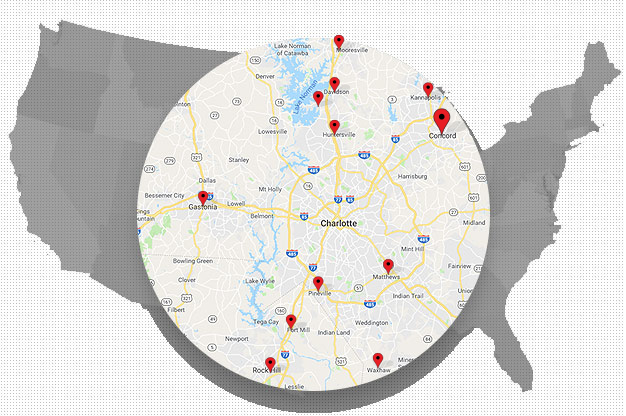
We’re based in Concord and serve homeowners in Charlotte, Kannapolis, Harrisburg, Huntersville, and surrounding areas. If you’re seeing cracks, sticking doors, or sloping floors, schedule a foundation evaluation or call (704) 960-7906. You’ll find out what’s causing the movement and what it will take to stop it.