The Homeowner’s Storm-Prep Checklist for Crawl Spaces in North Carolina
North Carolina homeowners usually prepare for storm season by checking the roof, cleaning gutters, trimming trees, and stocking emergency supplies. But one area is often missed: the crawl space.
If your crawl space smells musty after rain, has damp soil, standing water, torn plastic, or wet insulation, the next heavy storm can make the problem worse.
Quick Answer: How Do You Prepare a Crawl Space for Storm Season?
To prepare a crawl space for storm season in North Carolina, check for standing water, inspect the vapor barrier, clean gutters, extend downspouts, look for mold or wet insulation, seal openings, and schedule a professional crawl space inspection before heavy rain arrives. A properly installed vapor barrier can help reduce ground moisture and protect the home from musty odors, mold, wood rot, pests, and crawl space humidity.
Crawl Space Storm-Prep Checklist for North Carolina Homeowners
1. Check for standing water before the next storm
Do not wait until after a major rain event. Look inside the crawl space for puddles, wet soil, water stains, or a liner that has water sitting on top of it. Sedona Waterproofing Solutions handled a project where they dealt with standing water on a crawl space liner, which is exactly the kind of problem homeowners should address before storm season.
2. Notice musty smells inside the home
A musty smell after rain can be a sign that moisture below the home is affecting the air above it. Musty odors, wet insulation, standing water, visible mold, wood rot, and increased humidity are warning signs that you need to talk to a crawl space waterproofing service.
3. Inspect the vapor barrier
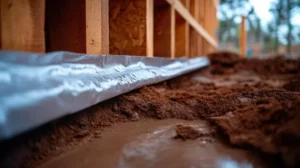
A crawl space vapor barrier helps block ground moisture from rising into the home. Vapor barriers are commonly made from polyethylene sheeting and are used to reduce moisture, humidity, mold risk, wood rot, pest intrusion, and poor indoor air quality.
If the plastic is torn, thin, loose, missing, or not sealed at the seams, it may not provide enough protection before heavy rain. Also, vapor barrier seams should overlap and be taped with waterproof seam tape. When you need help, hiring a vapor barrier installation service makes more sense.
4. Make sure gutters and downspouts drain away from the foundation
One of the easiest ways to reduce crawl space water risk is to move roof runoff away from the home. If downspouts dump water near the foundation, the soil around the crawl space can become saturated. Homes with repeated pooling may need professional drainage improvements such as downspout extensions or French drain installation.
5. Look for mold, wet insulation, and damaged wood
NC State Extension says mold needs moisture to grow and recommends inspecting homes for signs of excess moisture and mold growth. In a crawl space, that may show up as dark staining on joists, falling insulation, damp ductwork, or a persistent earthy odor.
If mold is already visible, a vapor barrier alone may not be enough. Homeowners may need crawl space mold remediation before installing a long-term moisture-control system.
6. Check crawl space vents, gaps, and penetrations
Open vents, cracked masonry, gaps around pipes, and foundation openings can let humid air, storm-driven rain, pests, and debris into the crawl space. Crawl space moisture can come from vents, foundation penetrations, condensation from HVAC equipment, plumbing leaks, and drainage issues.
7. Decide whether you need a vapor barrier or full encapsulation
A vapor barrier is often a smart first step for homes with exposed soil or worn-out plastic. Full crawl space encapsulation is more complete and may include sealing the floor, walls, vents, and adding humidity control. Encapsulation is designed to seal out moisture, prevent mold growth, and improve indoor air quality for homes in Charlotte and the Carolinas.
The North Carolina Residential Code also requires a minimum 6-mil polyethylene vapor retarder or equivalent to cover exposed earth in crawl spaces, which shows how important ground-moisture control is in crawl space construction.
Why Crawl Space Storm Prep Matters in North Carolina
North Carolina storms are not only a coastal problem. Tropical systems can bring heavy rain, saturated soil, and inland flooding far from the beach. Hurricanes can produce heavy rainfall that leads to inland flooding, and the NC State Climate Office notes that hurricanes such as Florence caused extensive flooding across many parts of the state.
That matters because crawl spaces sit close to the ground. When rain collects near the foundation, moisture can enter through exposed soil, foundation cracks, vents, plumbing penetrations, or poor drainage. Over time, that can lead to mold, wood rot, pest activity, high indoor humidity, and musty odors inside the home.
Talk to an Expert Team to Protect Your Crawl Space
Sedona Waterproofing Solutions provides crawl space waterproofing, vapor barrier installation, drainage solutions, crawl space encapsulation, mold remediation, and foundation repair across Charlotte and nearby areas. Schedule a free inspection through Sedona’s contact page.
Frequently Asked Questions
Why does my crawl space smell musty after rain?
A musty smell after rain often means moisture is collecting below the home. Common causes include exposed soil, poor drainage, torn vapor barriers, foundation gaps, wet insulation, or mold growth.
Can a vapor barrier stop water in my crawl space?
A vapor barrier helps block ground moisture, but it may not solve standing water by itself. Homes with active water intrusion may also need drainage, a sump pump, sealing, or crawl space encapsulation.
Should I install a vapor barrier before peak hurricane season?
Yes, spring is a smart time to inspect or replace a crawl space vapor barrier. Installing it before hurricane season can help reduce moisture problems before repeated heavy rain arrives.
Who installs crawl space vapor barriers near Charlotte, NC?
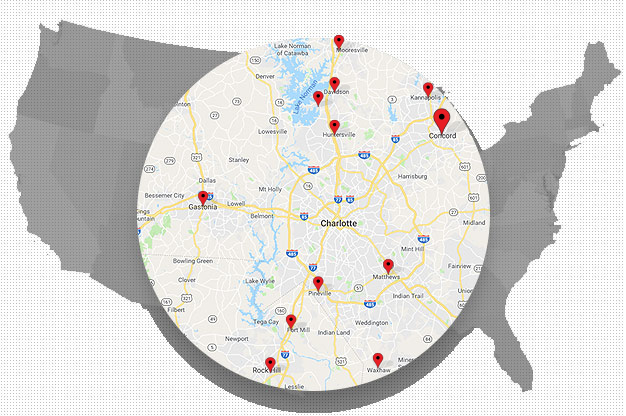
Sedona Waterproofing Solutions installs crawl space vapor barriers and waterproofing systems for homeowners in Charlotte, Concord, Huntersville, Matthews, Lake Norman, Mooresville, and nearby North Carolina communities. Schedule a free inspection through Sedona’s contact page.