

7 Signs Your Brick Mortar Needs Repair Before Winter in North Carolina
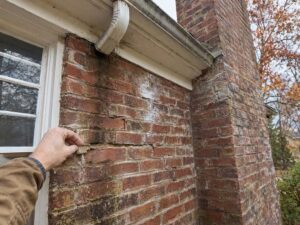
Run your hand lightly across an aging mortar joint. If grains of mortar fall away, the joint has already begun to lose material.
That does not automatically mean the wall is unstable or that every joint needs to be replaced. But crumbling mortar, widening cracks, missing joints, loose bricks, deep erosion, white deposits, and recurring dampness are all signs that the masonry deserves a closer look before winter.
In North Carolina, periods of rain followed by colder temperatures can expose weaknesses that were easy to overlook during warmer months. The important step is determining why the mortar is deteriorating before deciding whether the answer is repointing, tuckpointing, brick replacement, moisture correction, or structural repair.
7 Signs Your Brick Mortar May Need Repair Before Winter
1. Mortar is Crumbling or Turning to Powder
Healthy mortar should not readily turn to sand when touched. If you can scrape significant material from a joint with light pressure, deterioration is underway.
Age is one possible cause, but not the only one. Repeated moisture exposure, incompatible previous repairs, and weathering can all weaken mortar.
This is especially worth checking before winter because worn joints provide less protection around the bricks. The National Park Service recommends identifying the source of deterioration before repointing rather than simply replacing damaged mortar and assuming the problem is solved.
2. Cracks are Appearing or Getting Wider
A small crack in one mortar joint and a stair-step crack extending across several courses of brick are not the same problem.
Some isolated cracks develop from normal movement or localized mortar deterioration. Cracks that widen, return after previous repairs, or travel diagonally through a wall can point to movement elsewhere in the structure.
For example, filling a stair-step crack with new mortar may improve its appearance without correcting foundation settlement underneath it. When cracking appears to be progressing, the cause should be assessed before the joint is patched.
3. Mortar is Missing Between Bricks
Open gaps are one of the easier signs for homeowners to recognize.
Mortar may gradually erode until portions of a joint disappear entirely. These openings can provide pathways for water and leave brick edges more exposed to weather.
If the bricks remain sound and the problem is limited to deteriorated joints, repointing may be appropriate. Large areas of missing mortar, loose masonry, or repeated deterioration deserve a broader inspection rather than a quick surface repair.
4. Mortar Joints Look Deeply Recessed or Eroded
Not every recessed joint is damaged. Some masonry was intentionally finished with recessed or shaped joints.
The concern is change.
If joints that were once relatively full have worn noticeably deeper, or one section of a wall is eroding much faster than the rest, mortar loss may be occurring.
Deep erosion can also expose more of the brick edges to water. On an older home, the replacement mortar should be compatible with the existing masonry rather than simply being chosen because it is harder or stronger.
5. Bricks Are Loose, Shifting, or Separating
A loose brick is different from a worn mortar joint.
If bricks move when touched, portions of a wall appear to bulge, or gaps are developing between sections of masonry, replacing visible mortar may not address the full problem.
Movement can involve failed mortar, deteriorated wall connections, settlement, or other structural conditions. Those situations require investigation first.
In some masonry-wall repairs, helical ties can be used to reinforce and stabilize brickwork when movement or separation is involved. The right repair depends on what is actually causing the wall to move.
6. White Deposits or Persistent Damp Patches Appear on the Brick
A white, powdery deposit on masonry is often efflorescence: salts left behind as moisture moves through the masonry and evaporates.
Efflorescence does not prove that the mortar has failed. It does tell you that moisture has been present.
Replacing mortar while ignoring a leaking gutter, flashing defect, drainage issue, or another water source can result in the same deterioration returning.
Look for patterns. A damp area directly below a downspout, for example, suggests a different investigation than widespread erosion across an exposed wall.
7. Water Stains or Dampness Appear Near Brick Walls
Homeowners sometimes assume that visible water beside a brick wall means the mortar needs to be sealed or replaced.
It can. But water takes complicated routes through buildings.
Damaged mortar joints may contribute to moisture entry, while failed flashing, roof drainage, window openings, grading, or foundation conditions can produce similar symptoms.
The National Park Service specifically cautions that repointing alone will not correct deterioration caused by unresolved water or structural problems.
Treat interior staining as evidence to investigate, not as a diagnosis.
Why Should North Carolina Homeowners Check Brick Mortar Before Winter?
Mortar deterioration is easier to evaluate before existing damage is repeatedly exposed to winter moisture.
North Carolina does not experience the prolonged severe freezes associated with colder regions, but temperatures can still move above and below freezing during winter. If masonry is already retaining moisture, changing conditions can add stress to weakened joints and brick surfaces.
Fall is therefore a useful time to walk around the house and look closely at chimneys, exterior brick walls, steps, and other masonry.
Pay particular attention to areas below gutters, around openings, near grade, and anywhere deterioration appears concentrated. The pattern often provides clues about the cause.
Does Damaged Brick Mortar Always Need Tuckpointing?
No. Damaged mortar does not automatically mean a home needs tuckpointing.
Repointing removes deteriorated mortar from existing joints and replaces it with compatible new mortar. Traditional tuckpointing adds a narrow contrasting line to create a precise finished appearance, although contractors often use the term more broadly when discussing mortar-joint repair.
Some walls need only localized repointing. Damaged bricks may need replacement. Movement may require structural repair. Persistent moisture may need to be traced to flashing, drainage, roofing, or another source before mortar work begins.
That is why diagnosis comes before repair.
On older brickwork in particular, harder is not necessarily better. Replacement mortar should be compatible with the surrounding masonry because an excessively hard or impermeable mortar can contribute to deterioration of softer brick.
Protect Your Brickwork Before Winter with a Professional Assessment
If mortar is visibly crumbling, joints are opening, bricks are moving, or moisture keeps appearing around masonry, the next step is to determine the cause rather than cover the symptom.
For homeowners in Charlotte, Concord, and surrounding North Carolina communities, an experienced masonry assessment can establish whether the area needs localized mortar repair, broader repointing, tuckpointing, brick replacement, or investigation of an underlying moisture or structural problem.
Frequently Asked Questions
Can brick mortar be repaired during winter in North Carolina?
Yes, some masonry repairs can be completed during colder months, but temperature, weather protection, mortar type, and curing conditions must be considered. Work should not proceed under conditions that prevent the mortar from curing correctly.
How do I know whether my brickwork needs tuckpointing or repointing?
That depends on the condition of the joints and the intended finish. Repointing replaces deteriorated mortar. Traditional tuckpointing also creates a contrasting fine joint. An inspection can determine which approach fits the masonry.
Can deteriorated mortar cause water leaks inside a home?
It can contribute to water penetration, particularly when joints contain cracks or missing sections. However, flashing, gutters, windows, roofing, drainage, and other building components can produce similar symptoms and should also be checked.
Should cracked brick mortar always be repaired immediately?
Not every small crack is an emergency. Cracks that are widening, recurring, accompanied by brick movement, or associated with moisture deserve closer attention because simply filling them may hide an unresolved problem.
What happens if deteriorated mortar is left unrepaired?
Deteriorated joints can continue losing material and allow greater exposure to moisture. Over time, surrounding masonry may also be affected. The rate of deterioration depends on the wall’s condition, exposure, drainage, and the original masonry materials.