Crawl Space Mold: 8 Warning Signs to Watch For
Have you noticed a musty smell in your home that never seems to go away? Maybe your floors feel damp, or you’ve seen dark spots on the wood beneath your house. These could be signs of crawl space mold. Mold often develops in crawl spaces because these areas are dark, humid, and poorly ventilated. Once moisture builds up, mold can grow on wood, insulation, and other materials.
For homeowners in Charlotte and surrounding North Carolina communities, humid summers and heavy rainfall can make crawl space moisture a serious concern. The good news is that recognizing the warning signs early can help you address moisture problems before they cause more damage. Here’s how to identify possible mold growth, understand what causes it, and determine when professional help may be necessary.
What Is Crawl Space Mold?
Crawl space mold is fungal growth that develops on damp materials beneath a home. Mold reproduces by releasing tiny spores into the air. These spores are common indoors and outdoors. When they land on a damp surface with a suitable food source, they can begin growing.
Crawl spaces provide several conditions that encourage mold growth:
- High humidity
- Standing water
- Damp soil
- Plumbing leaks
- Condensation
- Wet insulation
- Moisture-damaged wood
Mold can grow on wooden floor joists, subflooring, insulation materials, and other organic surfaces.
Important: Mold growth usually indicates an ongoing or past moisture problem. Cleaning visible mold without correcting the source of moisture may allow it to return.
How Do I Know If My Crawl Space Has Mold?
The most common signs of crawl space mold include musty odors, visible discoloration on wood, damp insulation, condensation, and excessive humidity. However, not every dark stain is mold. Water damage, dirt, and other materials can look similar.
Here are eight warning signs homeowners should recognize.
1. Persistent Musty Odors
One of the earliest warning signs is a musty or earthy smell.
You might notice the odor:
- Near floor vents
- Around plumbing openings
- In closets or rooms on the first floor
- When your heating or cooling system runs
- After heavy rainfall
Air can move between a crawl space and the living areas above it through gaps and openings. If your home still smells musty after cleaning, moisture beneath the house may be contributing to the problem.
2. Dark Spots or Discoloration on Wood
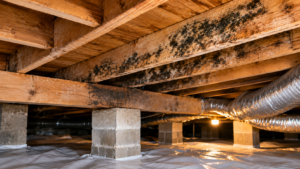
Mold may appear as black, green, gray, white, or brown patches.
Common locations include:
- Wooden floor joists
- Support beams
- Subflooring
- Wooden framing
- Insulation surfaces3.
Some growth looks fuzzy, while other areas appear flat or powdery.
Remember: You cannot identify a mold species or determine whether it is dangerous based on color alone.
3. Excessive Humidity Beneath Your Home
High humidity is one of the leading conditions associated with crawl space mold. According to the U.S. Environmental Protection Agency (EPA), indoor relative humidity should generally remain below 60%, ideally between 30% and 50%. When humidity remains elevated, moisture can collect on cooler surfaces.
A crawl space hygrometer can help measure humidity levels. If readings stay above 60%, you may need further investigation.
4. Damp or Sagging Insulation
Insulation beneath your floors should remain dry. When moisture enters a crawl space, fiberglass insulation may become damp, compressed, or loose.
Warning signs include:
- Insulation hanging below floor joists
- Dark staining
- Wet or heavy insulation
- A persistent musty smell
- Visible mold-like growth
Wet insulation may lose some of its ability to resist heat transfer and can conceal moisture problems.
5. Standing Water or Wet Soil
Water beneath your home creates conditions that support mold growth.
Common sources include:
- Poor yard drainage
- Leaking plumbing
- Groundwater intrusion
- Foundation drainage problems
- Rainwater entering through crawl space openings
- Missing or damaged ground vapor barriers
Even without standing water, exposed soil can release moisture into the crawl space air.
Homeowner Tip: Check whether your crawl space becomes wetter after storms. This can help identify drainage problems that need attention.
6. Condensation on Pipes or Ductwork
Condensation forms when humid air contacts a surface that is cooler than the surrounding air.
In crawl spaces, this may occur on:
- Air-conditioning ducts
- Water pipes
- Metal supports
- HVAC equipment
- Other cool surfaces
Repeated condensation can wet nearby wood and insulation. If you frequently see water droplets on pipes or ducts, the crawl space may have a humidity problem.
7. Soft, Warped, or Damaged Wood
Long-term moisture exposure can damage wooden structures beneath your home.
- Possible warning signs include:
- Soft or weakened wood
- Warped floorboards
- Wood discoloration
- Sagging areas
- Deteriorating support materials
Mold and wood rot are different problems, although both can occur in damp environments. Some wood-decay fungi can weaken structural components. If you notice significant deterioration, a qualified professional should evaluate the affected materials.
8. Recurring Mold or Moisture Problems Inside Your Home
Problems beneath your home can sometimes affect indoor conditions. For example, moisture entering through gaps in the floor may contribute to humidity problems in living areas.
You might notice:
- Recurring musty odors
- Condensation
- Damp flooring
- Mold growth near moisture-prone areas
- Indoor humidity that is difficult to control
These symptoms do not prove that crawl space mold is the cause. However, they may justify inspecting the crawl space as part of a broader moisture investigation.
Why Is Crawl Space Mold Common in North Carolina?
North Carolina’s climate can create favorable conditions for crawl space moisture. Charlotte and surrounding communities experience warm, humid summers and periods of heavy rainfall. These conditions can affect homes with exposed soil, inadequate drainage, or poorly managed crawl space ventilation.
Humid Outdoor Air
During warm weather, humid outdoor air may enter a cooler crawl space. As that air cools, its relative humidity rises. Under certain conditions, condensation may develop on surfaces.
Ground Moisture
Exposed soil can continuously release water vapor into the crawl space. A properly installed ground vapor barrier helps limit this moisture movement.
Poor Drainage
Improper grading, clogged gutters, and poorly positioned downspouts can direct rainwater toward the foundation. When water collects near the home, it may enter the crawl space or increase moisture levels beneath the structure. For homeowners in Charlotte, Concord, Huntersville, Matthews, and nearby communities, managing crawl space moisture is an important part of maintaining a healthy home.
Is Crawl Space Mold Dangerous?
Crawl space mold should be taken seriously, particularly when growth is extensive or moisture problems remain unresolved. Mold exposure can cause symptoms in some individuals, including nasal congestion, coughing, eye irritation, throat irritation, worsening asthma symptoms, and allergic reactions.
People with asthma, mold allergies, weakened immune systems, or certain respiratory conditions may be more sensitive. However, the presence of mold beneath a house does not automatically mean occupants are being exposed to harmful levels. The level of concern depends on factors such as the amount of growth, air movement, building conditions, and individual sensitivity. The CDC recommends addressing mold growth and the moisture conditions that allow it to develop.
How Can You Tell If It’s Mold or Just Dirt?
Mold and dirt can look similar, especially on unfinished wood. Some differences may provide clues.
Characteristic |
Possible Mold |
Dirt or Dust |
| Appearance | Irregular spots or patches | Surface deposits |
| Color | Black, green, white, gray, or brown | Often gray or brown |
| Texture | May appear fuzzy or powdery | Usually loose particles |
| Odor | Sometimes musty | Usually little odor |
| Location | Often found on damp materials | Can collect on dry or damp surfaces |
Important: These differences are not reliable enough to confirm mold. Professional assessment may be appropriate when the source of discoloration is uncertain, or the affected area is extensive.
What Should You Do If You Suspect Crawl Space Mold?
If you suspect mold beneath your home, focus on identifying and correcting moisture problems.
Step 1: Avoid Disturbing Suspected Mold
Do not scrape, brush, or aggressively clean suspected mold growth without appropriate precautions. Disturbing contaminated materials can release particles into the air. Avoid entering a crawl space with standing water, exposed electrical hazards, structural damage, or other unsafe conditions.
Step 2: Identify the Moisture Source
Common problems include plumbing leaks, drainage failures, condensation, and exposed soil. The source must be corrected to reduce the risk of mold returning.
Step 3: Determine Whether Professional Remediation Is Needed
Small areas of mold on suitable surfaces may sometimes be addressed by homeowners using appropriate precautions. However, extensive growth, contaminated insulation, structural damage, or recurring problems may require professional mold remediation. The EPA recommends considering professional assistance when mold covers more than approximately 10 square feet.
Step 4: Long-Term Moisture Control
Once mold contamination has been properly addressed, additional moisture-control measures may help prevent future problems.
Depending on the home’s conditions, these may include:
- Drainage improvements
- Plumbing repairs
- Ground vapor barriers
- Crawl space waterproofing
- Crawl space encapsulation
- Properly sized dehumidification
The right solution depends on where moisture is entering and how the crawl space is constructed.
Can Crawl Space Encapsulation Help Prevent Mold?
Yes. Properly designed crawl space encapsulation can help reduce the moisture conditions that encourage mold growth. Encapsulation generally involves installing a durable vapor barrier across the crawl space floor and, where appropriate, along foundation walls. A complete moisture-control approach may also include sealing openings, addressing drainage, and managing humidity.
Benefits of Crawl Space Encapsulation
When properly designed and installed, encapsulation can help:
- Reduce moisture entering from exposed soil
- Maintain more stable humidity levels
- Protect wood and insulation from excessive moisture
- Reduce conditions that support mold growth
- Improve the overall moisture management of the crawl space
However, encapsulation is not a substitute for mold remediation. Existing mold contamination should be evaluated and addressed appropriately before the space is sealed.
Waterproofing vs. Encapsulation: What’s the Difference?
Crawl Space Waterproofing |
Crawl Space Encapsulation |
| Addresses water intrusion and drainage problems | Helps control ground moisture and humidity |
| May involve drainage systems or sump pumps | Typically involves vapor barriers and sealing |
| Focuses on managing unwanted water | Focuses on creating a more controlled crawl space environment |
| May be necessary before encapsulation | Often works best after water problems are corrected |
Many homes benefit from a combination of solutions.
When Should You Call a Crawl Space Professional?
Consider scheduling a professional evaluation if you notice:
- Persistent musty odors
- Recurring water intrusion
- Standing water beneath your home
- High crawl space humidity
- Wet or damaged insulation
- Visible mold-like growth
- Signs of wood deterioration
- Moisture problems that return after repairs
A qualified professional can help identify moisture sources and recommend appropriate corrective measures. If mold remediation is necessary, ask whether the company provides that service or works with a qualified remediation specialist.
Protect Your Home With Sedona Waterproofing Solutions
Crawl space mold is often a warning that moisture is not being properly controlled beneath your home. Ignoring the problem can allow damp conditions to continue, potentially affecting insulation, wood, and other building materials.
At Sedona Waterproofing Solutions, homeowners can explore crawl space waterproofing and encapsulation solutions designed to address unwanted moisture. Whether you’re concerned about damp soil, recurring water intrusion, or high humidity, identifying the source is the first step toward a lasting solution.
Don’t wait for a small moisture problem to become a costly repair.
Contact Sedona Waterproofing Solutions to discuss your crawl space concerns and request an evaluation of your home’s moisture-control needs.
Schedule a Crawl Space Consultation