Musty Crawl Space? 7 Causes and How to Fix Them
Have you noticed a damp, earthy smell coming from beneath your home? The odor may be stronger after heavy rain or during hot, humid weather. You might even notice it inside your living room, closets, or near floor vents.
A musty crawl space is more than an unpleasant smell. It can be an early warning sign of excess moisture, poor drainage, or hidden damage beneath your home. For homeowners in Charlotte, Concord, Kannapolis, and surrounding North Carolina communities, seasonal humidity and heavy rainfall can make crawl space moisture a recurring concern.
Why does your crawl space smell musty? The most common causes include damp soil, standing water, mold growth, wet insulation, plumbing leaks, and moisture entering through foundation walls or vents. The good news is that most crawl space odors can be addressed once the underlying moisture problem is identified.
What Causes a Musty Smell in a Crawl Space?
A musty smell often develops when moisture collects in an enclosed area and remains there. Damp wood, soil, insulation, and other building materials can release unpleasant odors. Mold and bacteria may also contribute to the smell when moisture levels remain high.
The odor itself does not identify the exact problem. A musty smell can indicate mold, but it does not prove mold is present. Finding the source is the first step toward choosing the right solution.
7 Common Causes of a Musty Crawl Space
-
Excess Ground Moisture
Many crawl spaces have soil beneath the home. Even when the ground looks dry, moisture can move from the soil into the air as water vapor. Without an effective vapor barrier, this moisture can raise humidity levels and contribute to damp conditions.
How to fix it: A properly installed vapor barrier or crawl space encapsulation system can help reduce moisture entering from the ground.
-
Standing Water After Heavy Rain
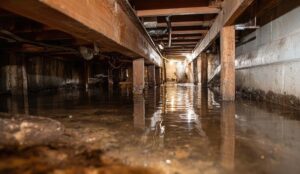
Rainwater can collect beneath a home when drainage systems do not move water away from the foundation. Common causes include clogged gutters, short downspouts, poor yard grading, and groundwater entering through foundation openings. Standing water can lead to persistent odors and damage nearby building materials.
How to fix it: Identify where the water enters. Solutions may include drainage improvements, foundation waterproofing, or a sump pump when appropriate.
-
Mold and Mildew Growth
Mold grows on damp materials when suitable conditions are present. In a crawl space, growth may appear on wooden floor joists, subflooring, insulation, or other surfaces. Mold can produce a musty odor, but not all mold is visible, and not every musty smell comes from mold.
How to fix it: Correct the moisture source and arrange appropriate mold remediation when needed. Cleaning visible growth without controlling moisture may allow the problem to return.
-
Wet or Damaged Insulation
Insulation beneath your floors can absorb or trap moisture, depending on the material. When insulation becomes wet, it may sag, deteriorate, or collect dirt and other contaminants. These conditions can contribute to unpleasant odors and reduce insulation performance.
How to fix it: Repair the moisture problem first. Damaged insulation may need to be removed and replaced after the area is properly dried.
-
Plumbing Leaks Beneath the Home
A slow plumbing leak can go unnoticed for weeks or months. Even a small amount of water dripping onto soil or wood can create damp conditions and unpleasant smells.
Watch for:
- Damp spots beneath pipes
- Water stains on wood
- Puddles that appear during dry weather
- Dripping connections
- Unexplained increases in water usage
How to fix it: Have a qualified plumber repair the leak. After repairs, dry affected materials and evaluate them for damage.
-
Humid Air Entering Through Crawl Space Vents
During warm North Carolina summers, humid outdoor air can enter through crawl space vents. When that air contacts cooler surfaces, condensation may form on ductwork, pipes, or wood. Over time, repeated condensation can contribute to musty odors.
How to fix it: A professionally designed crawl space encapsulation or conditioning system can reduce uncontrolled humid air entering the space. Vent sealing should be part of a code-compliant moisture control plan.
-
Hidden Moisture Behind Foundation Walls
Water can enter through foundation cracks, joints, or porous masonry. This moisture may remain hidden behind insulation or stored materials. Signs can include white mineral deposits, damp foundation walls, staining, or water collecting along the perimeter.
How to fix it: A waterproofing professional can evaluate the source and determine whether drainage improvements, sealing, or other repairs are necessary.
Why Does My Crawl Space Smell Worse After Rain?
A crawl space may smell worse after rain because extra water enters the soil or foundation area. Heavy rainfall can increase ground moisture, raise humidity, and expose existing drainage problems. If odors get stronger after storms, check whether water collects near the foundation or beneath the home. For homeowners in the Charlotte region, seasonal storms make exterior drainage an important part of crawl space moisture control.
Can a Musty Crawl Space Make Your House Smell?
Yes. Air can move from the crawl space into the living areas through openings around pipes, wiring, ductwork, and floor penetrations. This movement can carry moisture and odors into the home.
You may notice a musty smell:
- Near floor vents
- In closets or lower-level rooms
- Around plumbing openings
- Near gaps in flooring
- During humid weather
A persistent odor inside the home may be connected to conditions beneath it. However, odors can also come from plumbing drains, HVAC systems, or other indoor sources. A thorough inspection helps identify the cause.
Is a Musty Crawl Space Dangerous?
A musty smell alone does not mean your home is unsafe. However, the moisture conditions causing the odor can contribute to problems that deserve attention. These may include mold growth, wood decay, damaged insulation, and poor indoor air quality.
The U.S. Environmental Protection Agency (EPA) explains that moisture control is essential for preventing indoor mold growth. People with asthma, allergies, or other respiratory sensitivities may experience symptoms in damp or moldy environments. If you notice persistent odors, visible growth, or structural damage, investigate rather than ignore it.
How Do You Get Rid of a Musty Crawl Space Smell?
Eliminating the odor requires correcting the conditions that created it. Air fresheners, sprays, and temporary odor treatments may hide the smell, but they do not resolve water intrusion or excess humidity.
Step 1: Identify the Moisture Source
Inspect the crawl space for leaks, standing water, condensation, wet insulation, and foundation moisture. If the area is difficult or unsafe to access, contact a qualified professional like Sedona Waterproofing.
Step 2: Repair Water and Drainage Problems
Correct plumbing leaks, drainage failures, and other sources of water intrusion. Exterior grading, gutters, and downspouts may also need attention.
Step 3: Remove Damaged or Contaminated Materials
Wet insulation, decayed wood, and mold-contaminated materials may require professional cleaning, remediation, or replacement. The extent of the work depends on the materials and severity of the damage.
Step 4: Install Appropriate Moisture Protection
A vapor barrier or crawl space encapsulation system can help prevent ground moisture and humid outside air from entering. The right solution depends on the home’s construction and existing conditions.
Step 5: Control Humidity
Some crawl spaces benefit from a dedicated dehumidifier or another approved conditioning method. The EPA recommends keeping indoor relative humidity below 60%, ideally between 30% and 50%, to reduce mold growth. A moisture professional can recommend a suitable target for your crawl space.
Step 6: Monitor Conditions
After repairs, monitor humidity and check for recurring odors or water. A digital hygrometer can help track changing moisture conditions throughout the year.
Crawl Space Encapsulation vs. Dehumidification: What’s the Difference?
Both methods can help manage crawl space moisture, but they serve different purposes.
| Crawl space encapsulation | Crawl space dehumidifier |
| Helps prevent ground moisture from entering | Removes excess moisture from the air |
| Reduces uncontrolled outside air entering the space | Helps maintain a humidity target |
| Uses sealed vapor barriers and other moisture-control measures | Uses mechanical equipment |
| Provides long-term moisture protection | Requires electricity and maintenance |
| Does not automatically remove existing moisture | Does not repair leaks or drainage problems |
For some homes, both solutions may be appropriate.
The most effective approach is to correct water intrusion first, then establish a reliable moisture control system.
When Should You Consider Professional Crawl Space Remediation?
Professional crawl space remediation may be necessary when moisture problems continue despite basic repairs.
Warning signs include:
- Musty odors that keep returning
- Standing water beneath the home
- Mold growth on framing or insulation
- Damaged or rotting wood
- High humidity despite moisture controls
- Wet insulation or repeated condensation
A professional evaluation can help determine whether the problem requires waterproofing, drainage improvements, encapsulation, mold remediation, or a combination of services.
How Can You Prevent Musty Crawl Space Odors From Returning?
Preventing recurring odors starts with keeping moisture under control.
Homeowners can take several practical steps:
- Keep gutters clean and direct downspouts away from the foundation.
- Maintain proper drainage around the home.
- Repair plumbing leaks promptly.
- Inspect vapor barriers for damage.
- Monitor crawl space humidity.
- Schedule an inspection when moisture or odors return.
These steps can help reduce the conditions that contribute to musty smells.
Protect Your Home With Sedona Waterproofing Solutions
A musty crawl space is often a warning that moisture is collecting beneath your home. Ignoring the smell may allow water damage, mold growth, or wood deterioration to continue.
At Sedona Waterproofing Solutions, homeowners can explore crawl space waterproofing, encapsulation, and moisture control services designed to address the source of damp conditions.
Whether you live in Charlotte, Concord, Kannapolis, or a surrounding North Carolina community, understanding your crawl space’s moisture problems is the first step toward protecting your home.
Concerned about a musty smell beneath your home?
Visit Sedona Waterproofing Solutions to request an inspection and learn more about available crawl space moisture solutions.